A life at high speed
Emails, messages and news. We move from one thing to the next and are rarely fully offline. Even our breaks happen on a screen. The pace has become so normal that we hardly notice it.
The German sociologist Hartmut Rosa calls it acceleration. Work, technology and life itself keep speeding up, and the price is what he calls alienation: we lose touch with ourselves, with each other and with nature. The world begins to feel silent.
He calls the opposite resonance. These are the moments when something in the world speaks to you, and you answer. According to Rosa, nature is one of the places where we can find it.
The brain researcher Peter Lund Madsen also urged us to switch off completely and give the brain a real break. Not a short pause with the phone in hand, but time when we actually let go.
My story
I am an expat kid. We moved between countries, schools and friendships, and I learned early on to adapt. The fixed point was the summers in the Danish forests.
As a young adult, the pressure took over: the good education, the good job, the career. I gave everything I had to my work, and my identity became what I could deliver.
Around corona, the world closed in on me. The office was swapped for the kitchen table, and the days blurred together. I could go several days without talking to anyone except through a screen. Of course I had family and friends. But most of my family lived at the other end of the country, and my friends had their hands full with their own young families. I lived alone in a small flat in Copenhagen, and there was no network around me to fill the void.
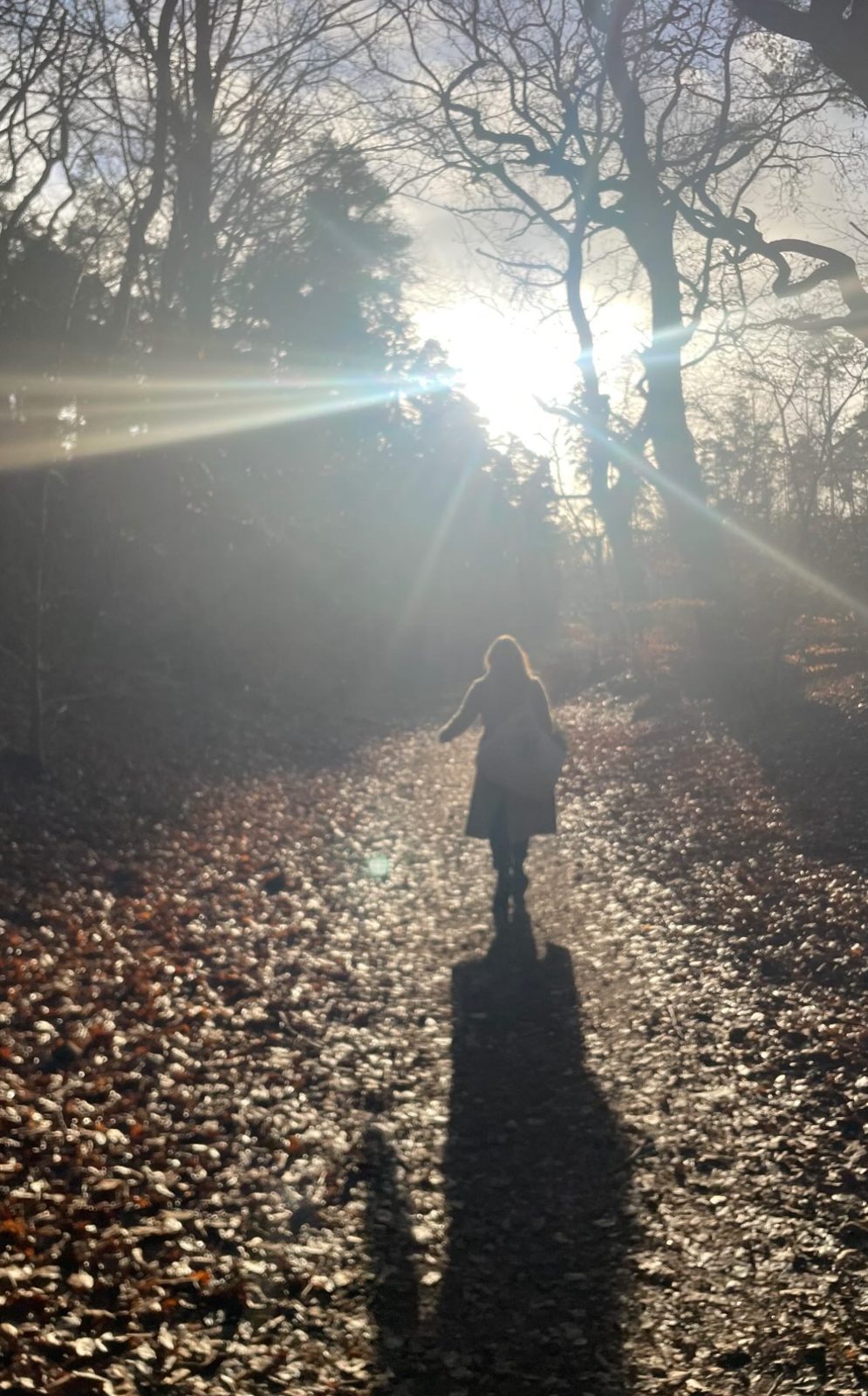
Like so many others, I turned to nature. At first it was just a walk to get out of the flat. Then it became every day. I began to notice how the forest changed from week to week: the first wild garlic, the light through the beech leaves, the scent after rain. I started reading about the old Nordic traditions and celebrating the festivals of the year. The forest became the place where I was not alone, even though no one else was there.
That is where it began.
A few years later I was stuck. I had ended up somewhere my effort no longer made a difference, and I could not simply leave. I did what I had always done: worked harder. I took the long days, said yes to more and believed it would turn around if I just gave a little more. But nothing came back. The part of me that had carried me all my life, the ability to perform, was suddenly not enough.
Then it all fell apart. I woke up tired, even after a full night's sleep. Words and names disappeared mid-sentence. Small things made me cry, and what used to bring me joy felt meaningless. I was burnt out and close to going on sick leave.
What carried me through
It was not one big change, but the quiet things. Morning walks in the forest before the day began. The breath, when my mind was racing. Saunagus and yoga, where the body was allowed to let go. The drum. And a small circle of women where I did not have to achieve anything.
It took time. But little by little my energy returned, and I learned the most important thing: my worth does not lie in what I achieve.
In Rosa's words, I found resonance again. The forest answered when I listened.
My why
What helped me was simple. It did not require me to believe in anything in particular or to have tried it before. Only that I gave myself permission to stop.
That permission is what I want to pass on. I create a calm space where you do not have to perform, and give you simple tools to take home. Then you can have time alone in the forest with a safe frame around you. I hold the space while you find your own answers.
Maria
See upcoming walks