Where the practices come from
What I share in the forest is a blend of old traditions and newer knowledge. I believe you have a right to know where things come from. Here you will find the origins, what the research says, and books if you want to go deeper.
The Nordic nature traditions
The wheel of the year, the herbs, and the idea of a living, ensouled nature.
Where it comes from
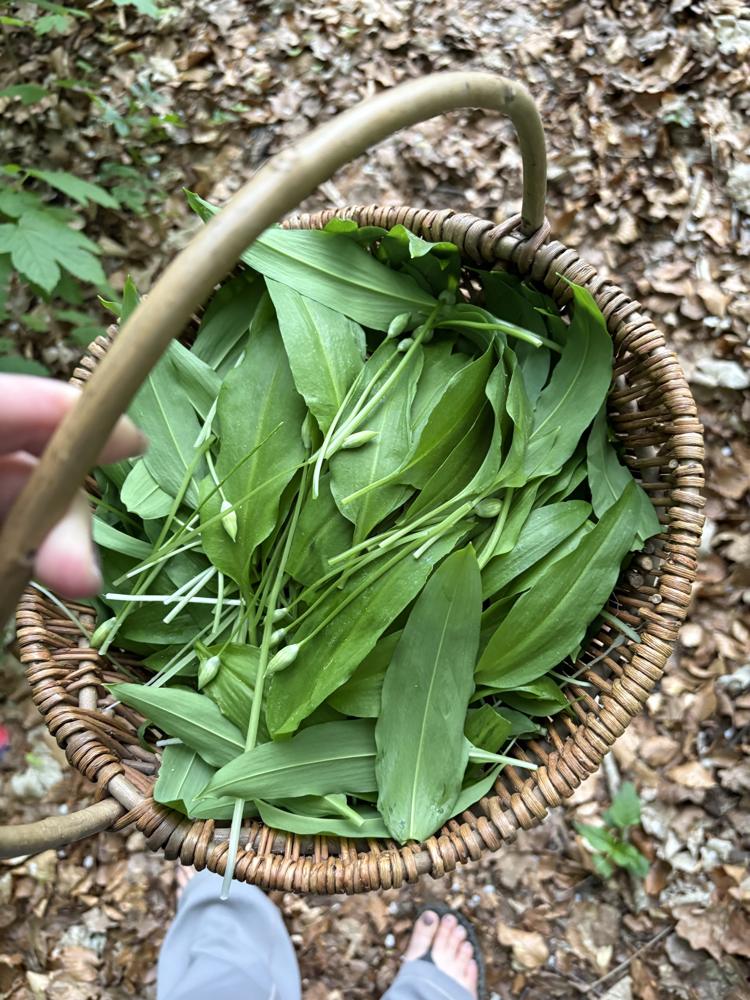
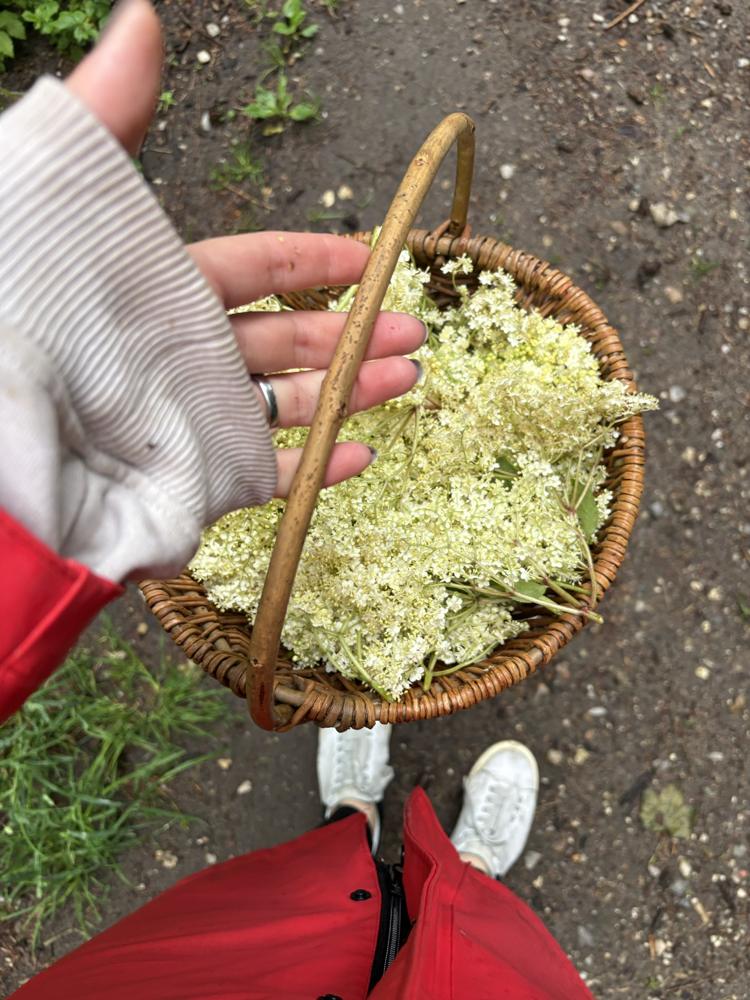
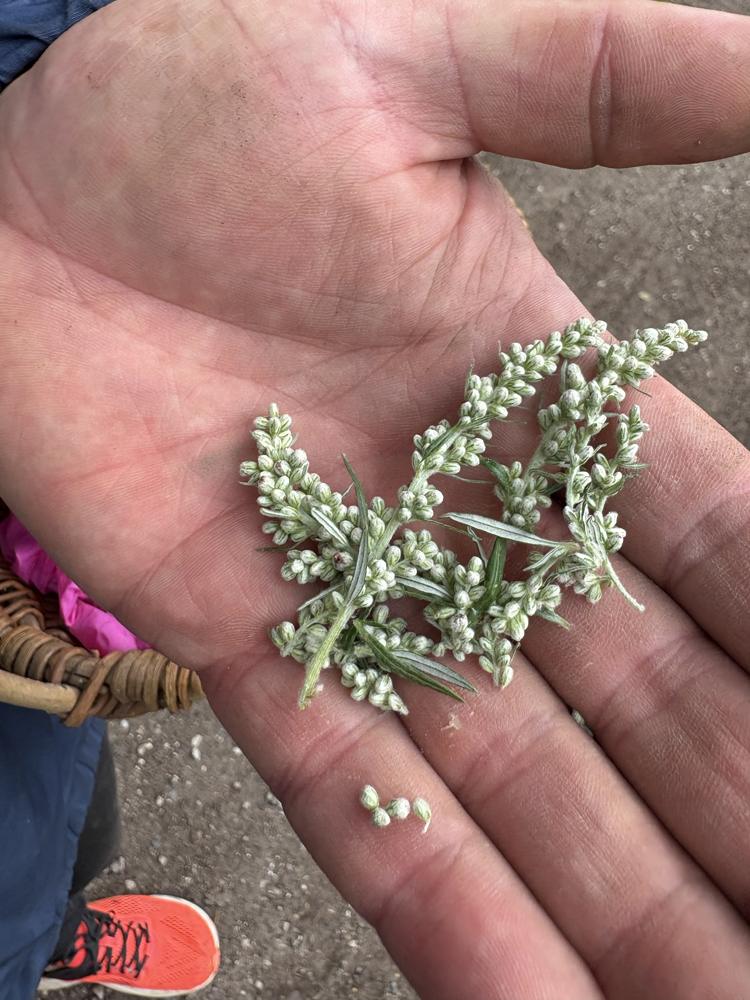
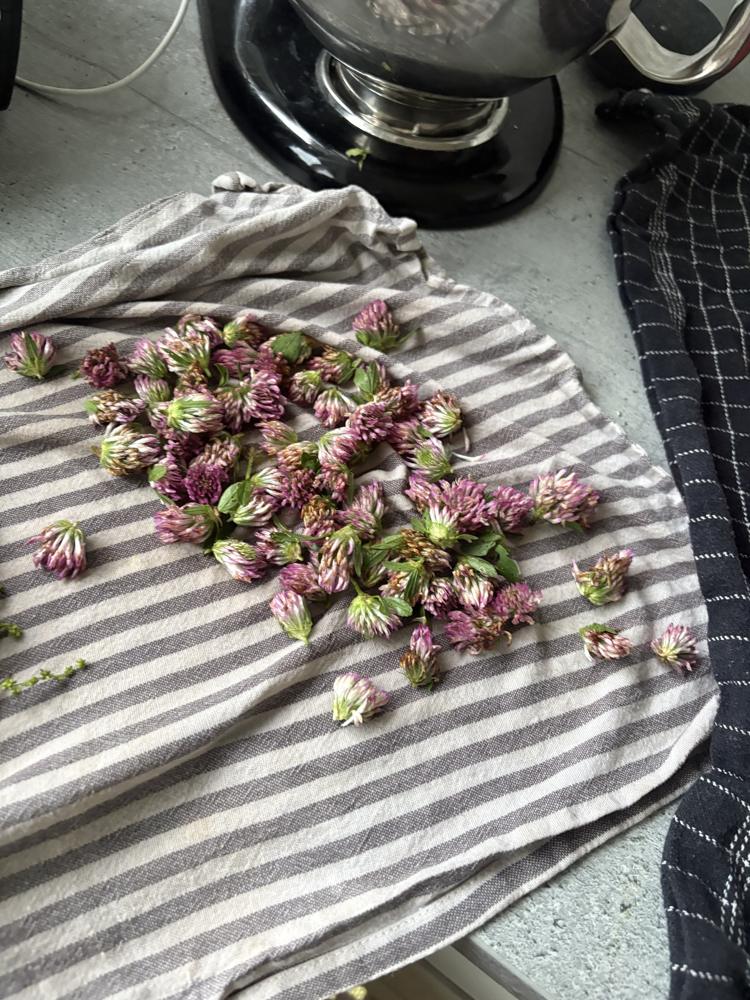
In Nordic folk belief and pre-Christian religion, nature was alive and ensouled. The year was marked by festivals at the solstices and equinoxes, and knowledge of herbs was passed down through generations. Much of it survives in folklore, legends and local customs.
How I use it
As the frame for all of Mind Nordic: we follow the turning of the year, ask the forest for permission before we enter, and let the plants of the season be part of the ritual.
Read more (in Danish)
- Blandt urter og elverfolk
Maria Lisette Jacobsen (Hyldemor), Muusmann Forlag - Hekseurter og folketro
Anemette Olesen, Hovedland - Animisme – fra klippekunst til klimakrise
Rune Engelbreth Larsen, Forlaget Dana
Free articles
From the library of the Scandinavian Center for Shamanic Studies (in Danish):
- I vølvens spor
Annette Høst. On seiðr in Nordic shamanism - At kende månens veje
Annette Høst. Moon lore and moon magic - På røgens vinger
Annette Høst and Maria Lisette Jacobsen. On ritual smoke in modern and indigenous traditions
Medicine walk
Time alone in nature with an intention.
Where it comes from
The practice has roots in Indigenous North American vision traditions, where a person goes alone into nature to seek answers. The form known in Europe today was developed in the 1970s by Steven Foster and Meredith Little, who founded The School of Lost Borders in California. I use it with respect for its origins and without imitating ceremonies that belong to other peoples.
How I use it
As the heart of the walk: you step across a threshold with your intention and let what you meet in the forest become a mirror.
Read more
- The Book of the Vision Quest
Steven Foster & Meredith Little - The Roaring of the Sacred River
Steven Foster & Meredith Little
Breathwork
From the pranayama of yoga to modern breathwork.
Where it comes from
I draw on three traditions. Pranayama comes from the Indian yoga tradition, where the breath is seen as the carrier of life force (prana), and techniques such as alternate nostril breathing have been used for centuries. The Wim Hof Method was developed by the Dutchman Wim Hof and combines deep, rhythmic breathing with breath holds. Holotropic Breathwork was developed in the 1970s by psychiatrists Stanislav and Christina Grof as a path to altered states of consciousness.
What the research says
A meta-analysis of randomised controlled trials found that breathwork on average reduces self-reported stress, anxiety and low mood (Fincham et al., 2023). A Stanford trial showed that five minutes a day of “cyclic sighing”, where the exhale is longer than the inhale, improved mood more than mindfulness meditation for the same amount of time (Balban et al., 2023). A Dutch study found that participants trained in the Wim Hof Method could influence their immune response (Kox et al., 2014).
Sources and reading
- Fincham et al. (2023). Effect of breathwork on stress and mental health: a meta-analysis of randomised-controlled trials. Scientific Reports
- Balban et al. (2023). Brief structured respiration practices enhance mood and reduce physiological arousal. Cell Reports Medicine
- Kox et al. (2014). Voluntary activation of the sympathetic nervous system and attenuation of the innate immune response in humans. PNAS
- Light on Pranayama
B.K.S. Iyengar - Breath – The New Science of a Lost Art
James Nestor - Holotropic Breathwork
Stanislav & Christina Grof - Huberman Lab (podcast)
Episodes on breathing and the nervous system
The drum & shamanism
A steady rhythm and one of humanity’s oldest practices.
Where it comes from
The frame drum has been used in ritual in many cultures, including in the Nordic region, where the Sámi have a long tradition of the ritual drum. In modern core shamanism, described by the anthropologist Michael Harner, a steady drumbeat is used for so-called drum journeys.
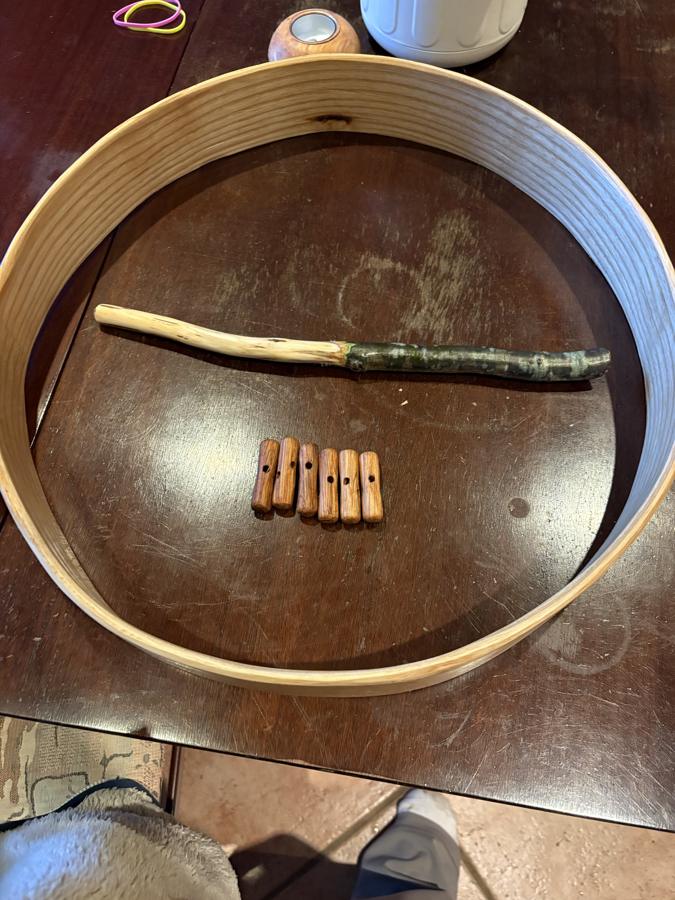
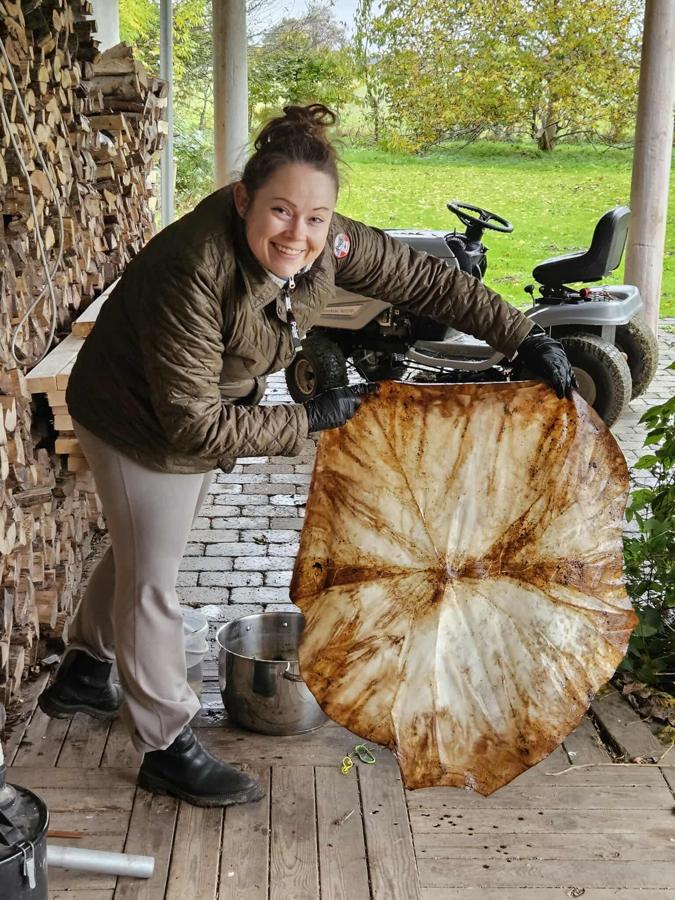
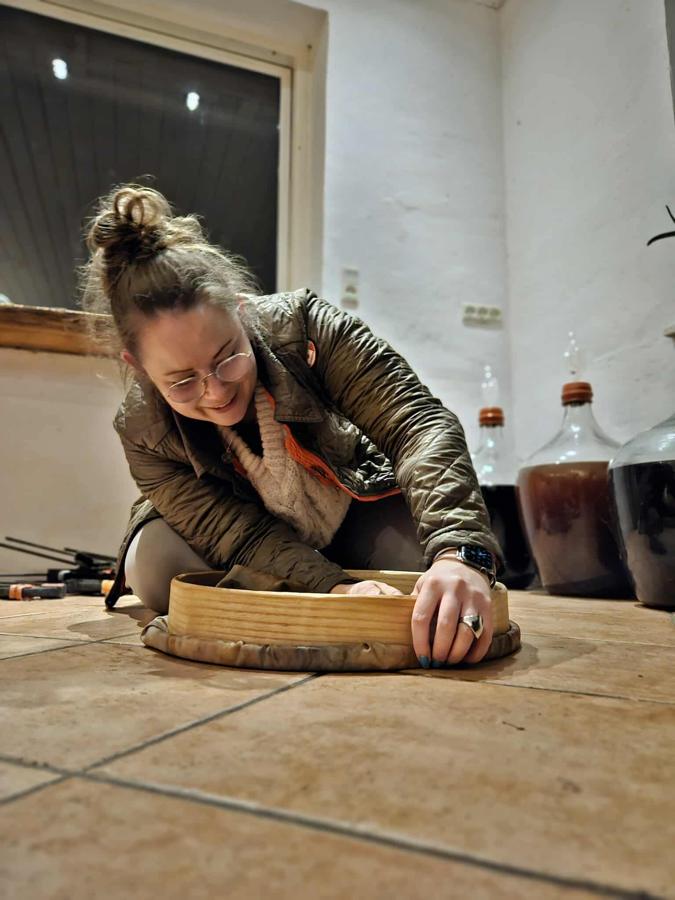
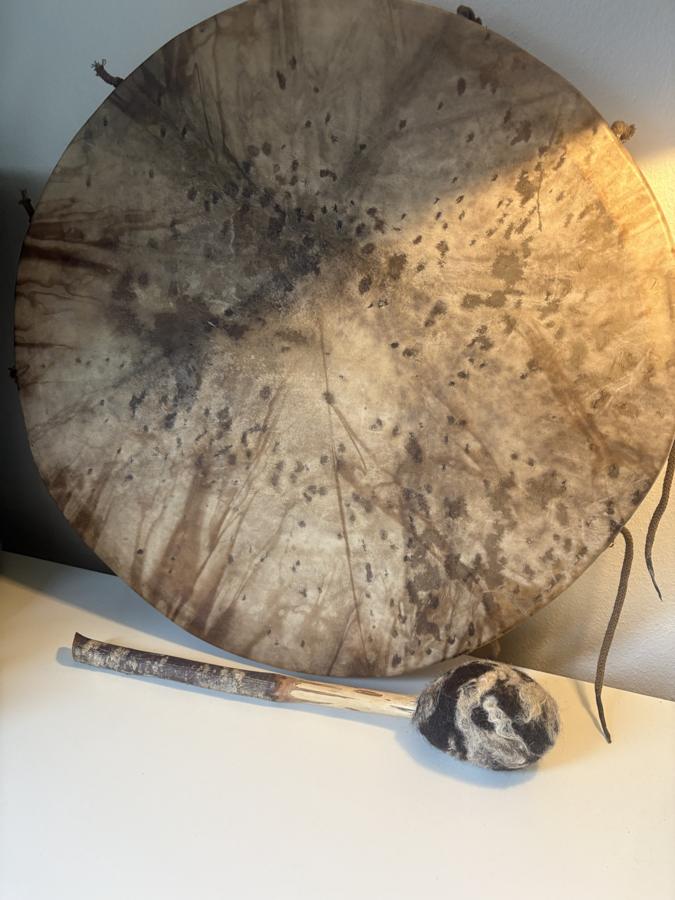
Build your own drum
I built my own drum with Nicolaj Tscherning Møller at his farm near Kalundborg. He has worked with shamanism for over 25 years and runs drum-building courses where you choose your hide, make your own beater and learn to connect with the drum (in Danish).
- Forbundethed.dk
Nicolaj Tscherning Møller
What the research says
A brain imaging study from the Max Planck Institute and Harvard showed that experienced practitioners listening to shamanic drumming had altered connectivity between brain networks and turned their attention more inward than when listening to an irregular rhythm (Hove et al., 2016).
Sources and reading
- Hove et al. (2016). Brain network reconfiguration and perceptual decoupling during an absorptive state of consciousness. Cerebral Cortex
The history of shamanism
- Shamanism: Archaic Techniques of Ecstasy
Mircea Eliade. The classic of religious studies on shamanism as one of humanity’s oldest practices - Shamanism: The Timeless Religion
Manvir Singh, Penguin (2025). A recent academic book on the origins, biology and future of shamanism - The Way of the Shaman
Michael Harner. The anthropologist who introduced the drum journey to the West
Nordic shamanism and animism
- The Earth Sings (Danish: Jorden synger)
Annette Høst. On the power of nature in the Nordic tradition, nature spirits and the practice of sitting out - Animisme – fra klippekunst til klimakrise
Rune Engelbreth Larsen, Forlaget Dana (in Danish)
Free articles
From the library of the Scandinavian Center for Shamanic Studies:
- All Life is Connected
Jonathan Horwitz. An introduction to the way and work of the shaman - Modern Shamanic Practice
Annette Høst. On core shamanism, neo-shamanism and what we actually do - En kreds af kraft
Annette Høst. On starting and keeping a drum circle alive (in Danish)
Other traditions
- The Wisdom Wheel
Alberto Villoldo. On Inka energy medicine and healing practice
Mindfulness & meditation
Being present with what is.
Where it comes from
Mindfulness has its roots in Buddhist meditation practice (sati, awareness). It was brought into Western healthcare by Jon Kabat-Zinn, who developed the MBSR programme in 1979. I am also inspired by Joe Dispenza’s meditations on intention and change, which are more experimental and less scientifically supported.
What the research says
A large review in JAMA Internal Medicine found moderate evidence that mindfulness programmes reduce anxiety, depression and pain (Goyal et al., 2014).
Sources and reading
- Goyal et al. (2014). Meditation programs for psychological stress and well-being: a systematic review and meta-analysis. JAMA Internal Medicine
- Full Catastrophe Living
Jon Kabat-Zinn - Becoming Supernatural
Joe Dispenza
Forest bathing
Shinrin-yoku: bathing in the atmosphere of the forest.
Where it comes from
The term shinrin-yoku was introduced in Japan in 1982 as part of a national health initiative. It has since become one of the most studied areas of nature and health.
What the research says
Several reviews suggest that time in the forest lowers the stress hormone cortisol and can reduce heart rate and blood pressure (Antonelli et al., 2019). The Nordic Nature Health Hub at the Swedish University of Agricultural Sciences (SLU) offers a Nordic overview of the research.
Sources and reading
- Antonelli et al. (2019). Effects of forest bathing (shinrin-yoku) on levels of cortisol as a stress biomarker: a systematic review and meta-analysis. International Journal of Biometeorology
- Nordic Nature Health Hub, SLU: Forest bathing
- Shinrin-Yoku – The Art and Science of Forest Bathing
Qing Li
Witch, völva, shaman
What do the words mean, and why don’t I use them about myself?
The völva
The völva was a seeress of the Nordic Iron Age and Viking Age. We know her from the sagas, such as the Saga of Erik the Red, and from graves where women were buried with a staff and special objects. She practised seiðr, a form of ritual and divination, and was sought out by the community for her insight.
The shaman
The word comes from Evenki, a Tungusic language of Siberia, and reached Europe through Russian and German travel accounts in the 17th and 18th centuries. Anthropologists later used it as a shared term for people in many cultures who journey in altered states of consciousness on behalf of their community.
The witch
In Danish folk belief it was the “cunning folk” who knew the herbs, helped at births and healed. In the 16th and 17th centuries, hundreds of people in Denmark were accused of witchcraft and executed, most of them women. Today many have reclaimed the word as a symbol of women’s knowledge, connection to nature and independence.
Why the titles matter
In many traditions a title is not something you give yourself. It is given by a community, after years of training, and it carries obligations. For others, the words are an important part of their identity and a way to honour those who came before. If you identify with one of these words, it is absolutely right for you to use it. It is part of your story, and you are the one who chooses how to live your life.
For my own part, I don’t feel these labels describe who I am, and I don’t have a need for them. I don’t take on the meaning or the obligations that come with them. I am simply me, sharing practices that have helped me, with respect for where they come from.
Read more (in Danish)
- Heksenes bog
Andrea Hejlskov, Gads Forlag - Heksens håndbog
Dannie Druehyld, Gyldendal - I vølvens spor
Annette Høst. On seiðr in Nordic shamanism
Nothing I offer replaces medical or psychological treatment. If you are in treatment or unsure, please talk to your doctor first.
See upcoming events